A Market Solution to the Housing Crisis
The term “social housing” often carries outdated stereotypes—poverty, crime, neighbourhood disruption and “Not in My Backyard” opposition. We need to change both the narrative and the language—because what we need is community housing.
Community housing is not something imposed on a neighbourhood. It is created by and for the community, providing secure and affordable homes for seniors, families, workers and people with lower incomes.
The Vernon Model is a real-world pilot project designed to create a new, self-sustaining pathway for community housing—and to help communities begin Building Solutions to the Housing Crisis.

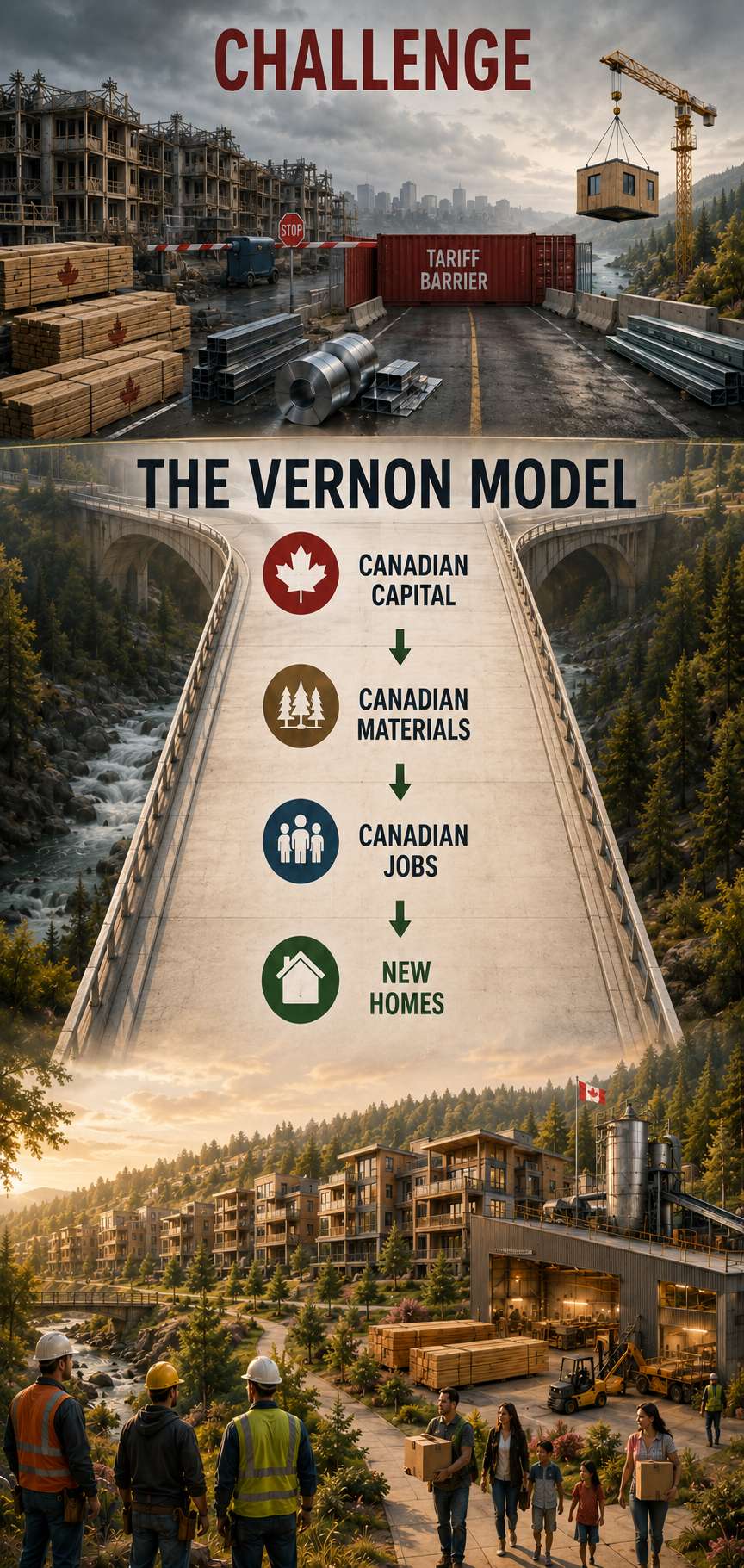
The Challenge
Canada needs 3.5 million additional homes by 2030. Governments are constrained by exploding deficits and can no longer sustain substantial housing subsidies to make housing affordable. BC recently cancelled $1.4 billion in funding for 4000 homes.

The Opportunity
Four Pillars and Vernon Native Housing Society is developing a a market model for community centric housing that is self-sustaining and doesn’t require ongoing government subsidies. This model can and will reshape how we design, build, finance and manage housing.
Housing as Infrastructure
The Vernon Model
The Vernon Model is designed around a 30–50–20 housing mix.
- 30% deeply affordable (RGI)
- 50% Employee housing at 20% below market
- 20% Affordable Homeownership (AHO) at 20-25% below market under a covenant on the deed.
RGI units for those in greatest need. Employee housing to help the people who serve the community—healthcare workers, hospitality employees, educators, retail workers and others—live closer to where they work.
The AHO homes provide an affordable pathway into homeownership. These homes will be sold below market value under an affordability covenant. The covenant will protect affordability when a home is resold, allowing future low- and moderate-income households to enter the housing equity market as well.
Three forms of housing. One inclusive community. And one financially sustainable model.
Community Investment
Building the Vernon Model requires a new way to mobilize capital. That is why I Invest in Housing is a linchpin of the project.
I Invest in Housing is being developed as a community investment platform that will enable citizens, corporations and institutions to invest directly in housing solutions.
Through Community Builder Bonds and other investment opportunities, capital can be put to work building real homes, secured by real property, in the communities where people live and work.
Rather than simply watching the housing crisis deepen, Canadians will have a practical way to become part of the solution—and community investment can become a recognized asset class for building housing and strengthening communities.
Community investment can also help attract matching contributions from governments, employers, foundations and financial institutions, multiplying the impact of every dollar the community invests.
The Process
Site Selection Choose the best site. Feasibilty: Can what you can build be self-supporting?
Finance: Build your capital stack and community partnerships . Delivery: Build the team and begin pre-construction

Confirm the Site and Development Potential
Identify a suitable site and assess zoning, allowable density, servicing, site conditions and approval requirements. Determine the building size and number of homes the site can realistically support.

Establish Project Feasibility
Develop the proposed unit count, bedroom and housing mix, unit sizes, amenity space and building efficiency. Estimate all hard and soft costs, projected revenues and financing requirements to determine whether the project is viable.

Build the Community Investment Model
Engage employers, governments, Indigenous organizations, financial institutions, industry and other community partners. Define how each partner can contribute capital, land, financing, expertise, purchasing commitments or recurring revenue—and test whether the completed housing can operate without ongoing subsidies.
Select the Delivery Team and Begin Pre-Construction
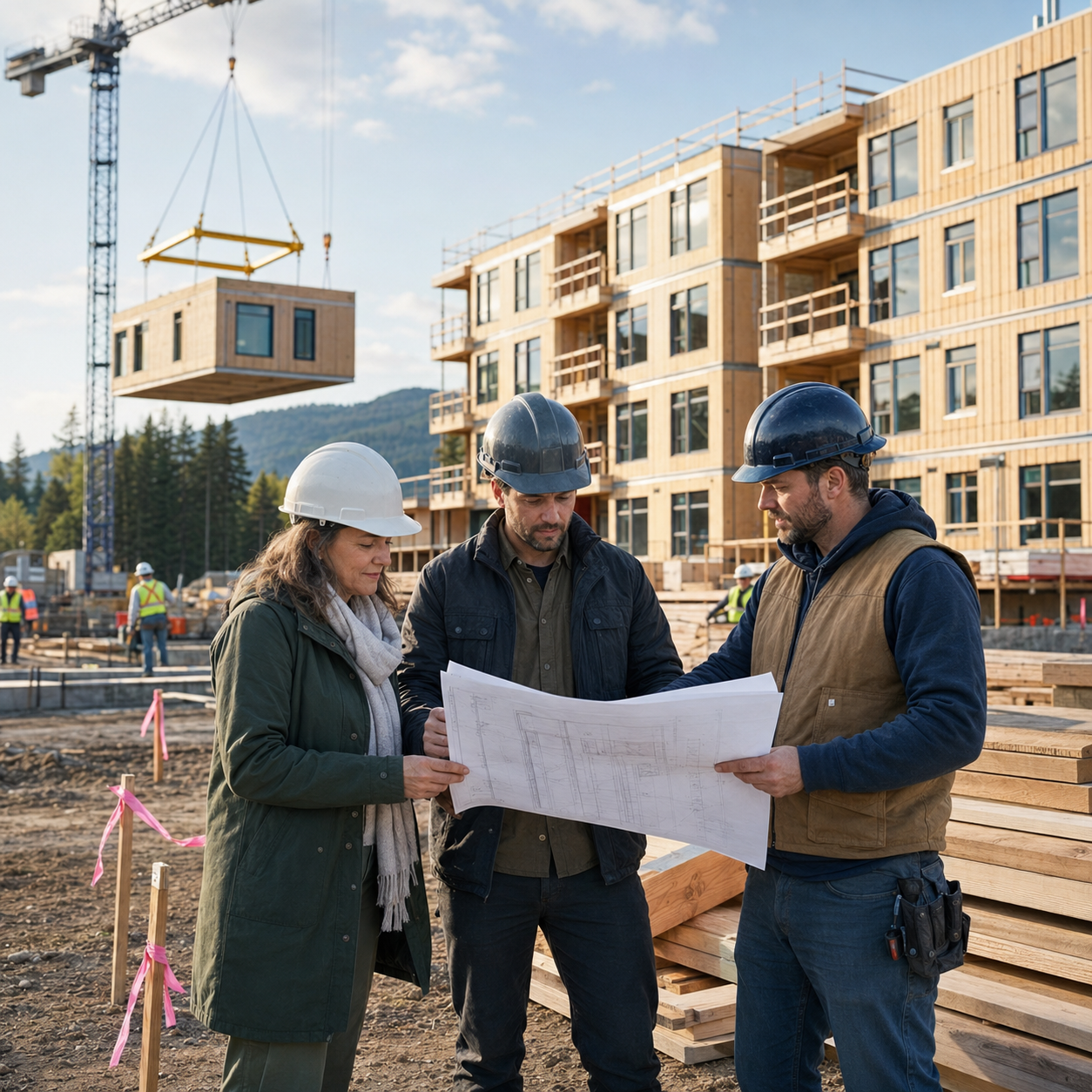
Choose the appropriate construction approach based on the housing provider’s capacity—such as a competitive fixed-price proposal or an internally managed development process. Select the builder and professional team, finalize the design and budget, secure approvals and financing, and prepare the project for construction.
Building Solutions to the Housing Crisis
The housing crisis is a community problem that requires a community solution. The Vernon Model helps non-profit housing providers bring together the resources already present in their communities—including land, investment capital, employers, industry expertise and local partnerships—to create viable, self-sustaining housing projects. Instead of carrying the development challenge alone, providers become the leaders of a coordinated community effort that turns local capacity into new homes.